
A step-by-step walkthrough of what AI governance looks like when it’s technically enforced, not written on paper. Your acceptable use policy says something like: “employees must not share sensitive company data with AI tools.” Someone signed it last quarter. Then they opened ChatGPT, typed a customer name and a contract value into a prompt, and […]
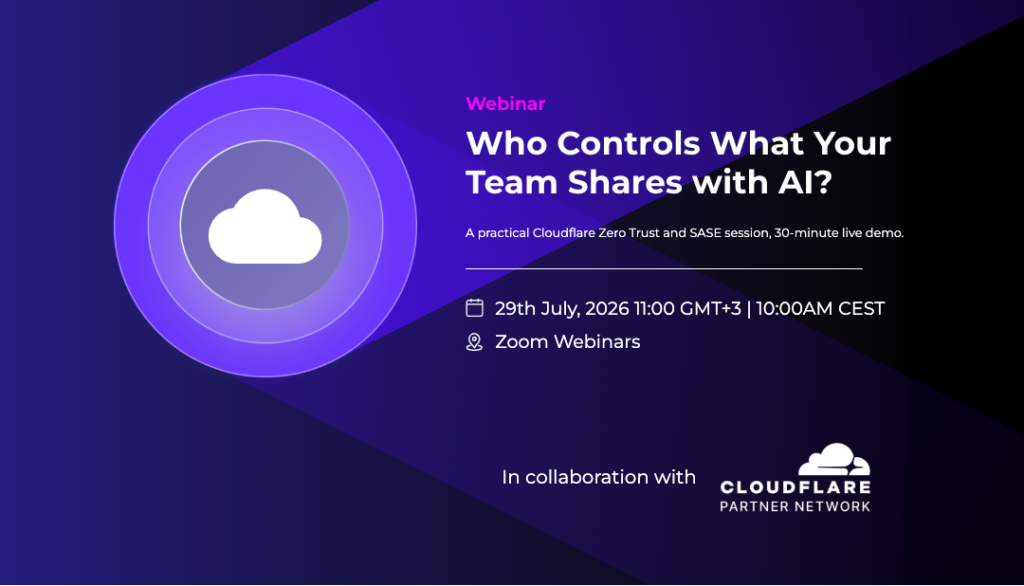
Your employees are using AI tools. You probably don’t know which ones, or what they’re sending.In this session, Ganesh The Awesome walks through how to close that gap in 30 minutes using Cloudflare Zero Trust and Cloudflare AI Gateway. Want to go deeper? We’re happy to run a 1-on-1 session tailored to your environment.
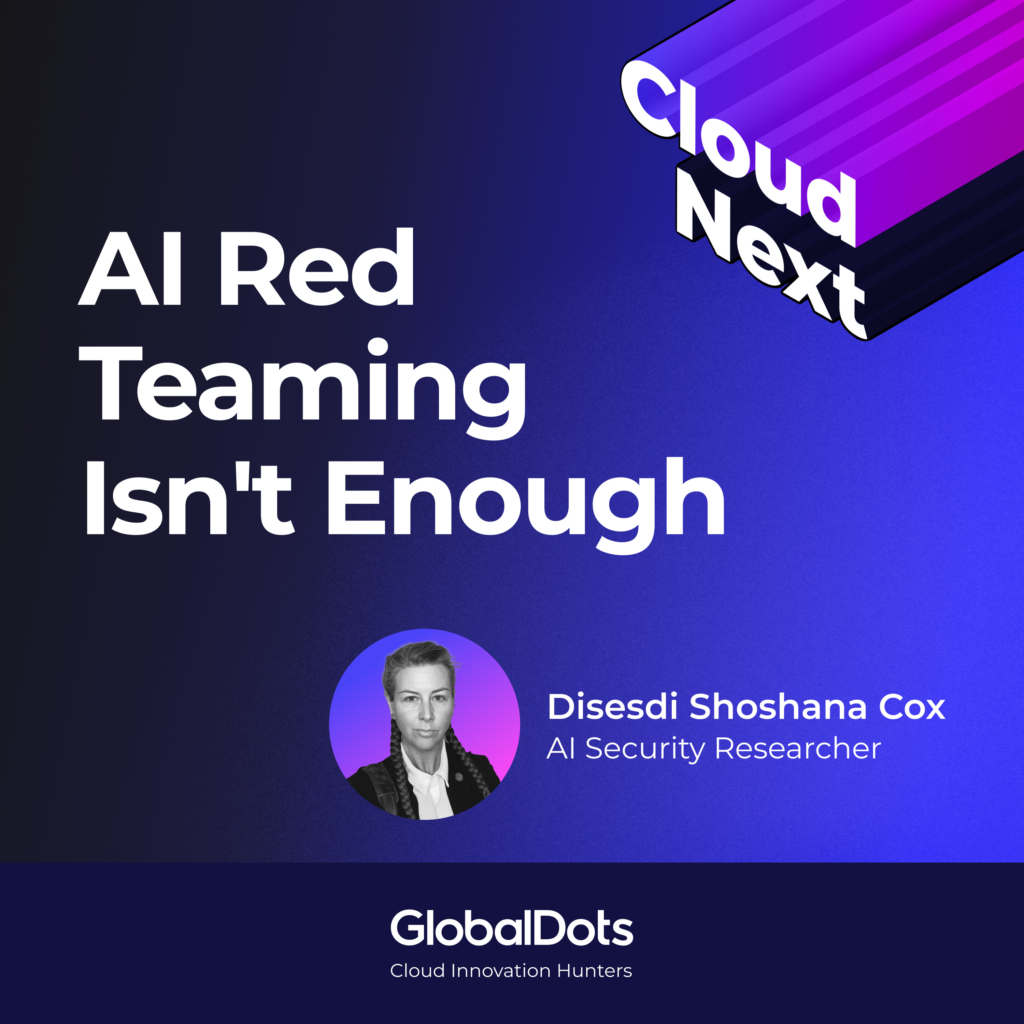
For years, security teams have relied on testing to validate defenses. With AI systems, that logic breaks. The reason is mathematical. Every AI model carries what researchers call an adversarial subspace: a set of inputs that will cause it to fail. These spaces are massive, sparsely clustered, and computationally infeasible to search. You cannot enumerate all the attacks. Which means you cannot test for all the attacks. Which means spraying thousands of prompts at a model and blocking the ones that work is not security. It is a demonstration. Shoshana Cox has been working on AI security since 2010, before generative AI existed. She wrote the first machine learning security operations paper in 2022. She holds a patent in federated AI architecture. She served on the core author team of the OWASP AI Exchange and helped prepare the technical requirements for the EU AI Act. She has spent years watching the industry build products that sell confidence without delivering protection, and she has paid a professional price for saying so publicly. In this conversation, Shoshana explains what adversarial subspaces actually are and how they form. She walks through attack transferability: how an attacker does not need access to your model to build attacks that work against it. She breaks down why AI monitoring with defined thresholds is how you deploy AI securely. And she makes the case that threat modeling is not optional groundwork. It is the only starting point that makes the rest of the work meaningful. This is a technical conversation. It does not offer quick fixes. What it offers is a clearer picture of how AI systems actually fail, and what it takes to defend them seriously. For security architects, CISOs, and anyone responsible for AI deployment decisions. Guest: Shoshana Cox, AI Security Researcher, OWASP AI Exchange Core Author, and former Red Teamer.
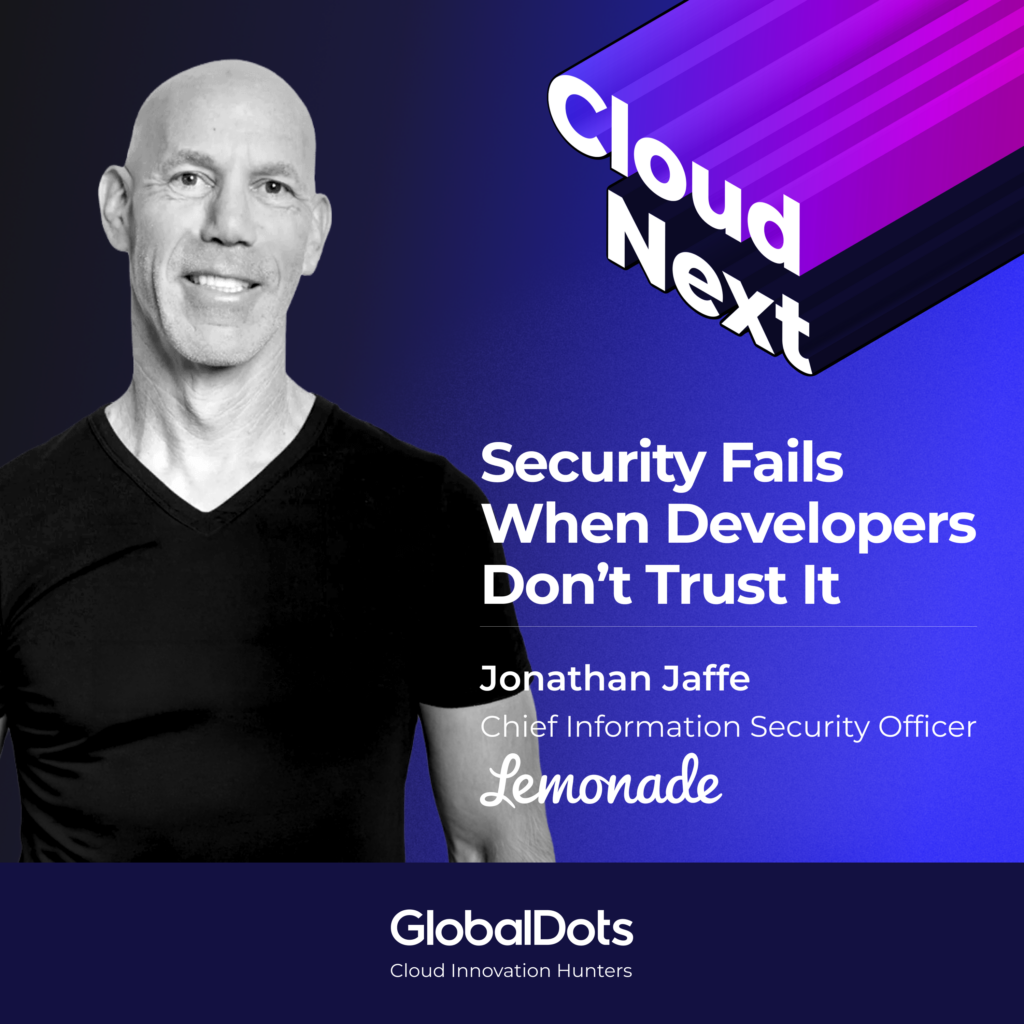
The problems rarely start with an attacker. They start earlier, in the way teams deploy, approve changes, and share responsibility. Developers don’t ignore security because they don’t care. They ignore it when it doesn’t fit their workflow, when it slows them down, or when the reasoning isn’t clear. In this episode, we host Jonathan Jaffe, CISO at Lemonade. He explains why most security failures are not about missing tools or advanced threats, but about how ownership, process, and decision-making are structured inside engineering teams. We talk about: Why security breaks at the ownership level, not the tool level How audit-driven controls fail in real environments What happens when developers stop trusting security decisions This is not a conversation about buying better tools. It’s about understanding why the tools you already have may not be working the way you think.
What does it take to lead large engineering teams without drowning them in process? In this episode of CloudNext, Jonathan Spies, VP of Engineering at Cloudflare, shares hard-earned lessons from scaling engineering organizations across multiple products. Jonathan talks about keeping teams small and autonomous, why fixed formulas for innovation and maintenance often fail, and how alignment, not control, enables speed at scale. The conversation explores hiring and culture during rapid growth, the importance of giving engineers business context, learning from failure, and how leaders can build systems that help teams make the right decisions without constant escalation.
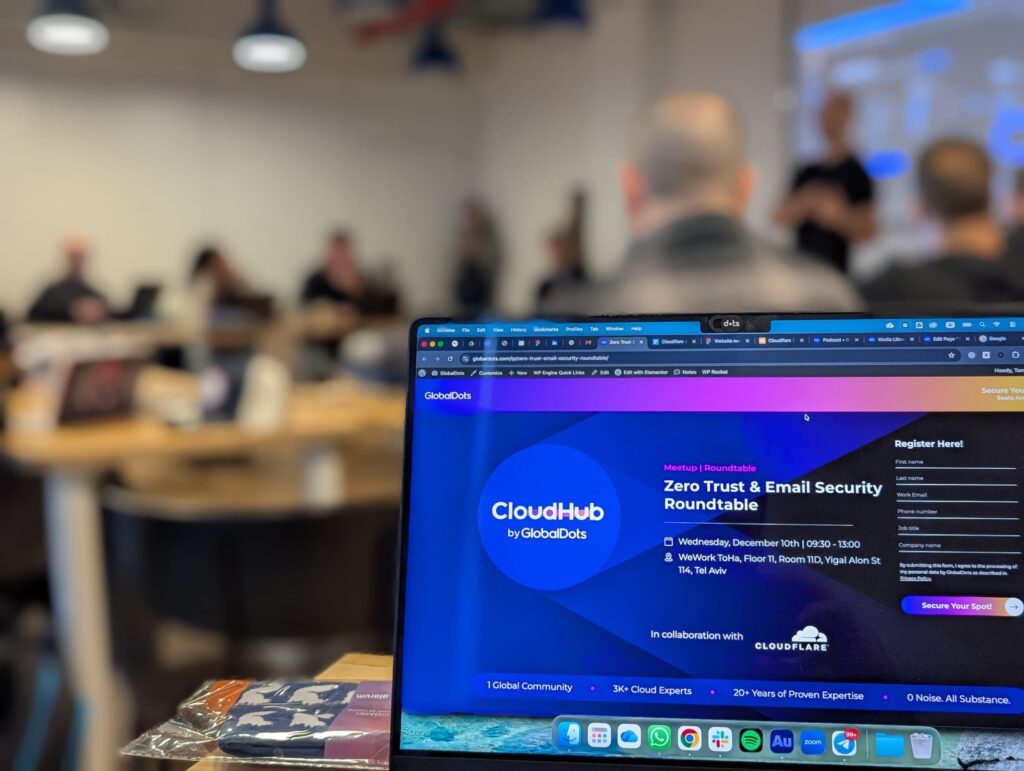
This blog is based on a closed roundtable discussion on Zero Trust and email security, where practitioners shared how these controls are implemented and operated in real-world environments. Not a conference. Not a product showcase. Just open conversations about what works, what breaks, and what needs to be adapted once theory meets reality. Across very […]
Cloud was supposed to simplify security. Instead, as Pierre Noel puts it, we’ve created a Frankenstein’s monster, a system so flexible and configurable that it often overwhelms the very teams meant to secure it. In this episode, recorded live at our CloudHub Berlin event, Pierre brings one of the widest perspectives in modern cybersecurity. As CISO EMEA at Expel, and with a career spanning Microsoft, Huawei, Airbus, and advisory roles to national cybersecurity authorities, he’s seen cloud transformation from every angle: technical, political, operational, and geopolitical. We dive into why traditional security thinking collapses in the cloud, how identity and configuration drift now drive most incidents, and why CISOs must rethink the mental models they carried from the datacenter era. Pierre also breaks down the real state of AI in security, why attackers benefit more from it today than defenders, and how security teams should realistically integrate automation without falling for hype. But the heart of the conversation is human. Pierre shares scars from decades of work: moments where boards dismissed risks, where technical teams misjudged business priorities, and where psychology mattered more than any tool. His message is clear: behind every incident is a human, and behind every resilient organization is a CISO who understands people as well as technology.
You might not know where your data goes after you feed it into AI — but someone else might. As AI tools spread across every corner of business, one question grows louder: how much control do you really have once your data enters the model? Live from CloudHub Berlin, Sean Gill, Head of New Business Sales EMEA at JumpCloud, joins us to unpack the hidden security gaps behind AI adoption — from fragmented systems and vendor lock-in to data inputs that could expose entire organizations. Sean shares what he hears daily from companies racing toward “AI-first” strategies: the tension between innovation and control, the blind spots created by legacy tech, and why secure identity management is now the foundation for trustworthy AI. If your company is embracing AI but unsure where its data truly lives, this episode offers a clear, grounded look at how to innovate without losing control.
Security leaders know the drill: vulnerability scanners run their course, reports stack up, and yet attackers still slip through. What’s going wrong? We sat down with Yosef Yekutiel, CISO & Data Privacy Officer at MaccabiDent, at GlobalDots’ recent “Red Team Reality Check” event to unpack this gap, and how modern offensive security can fill it. […]
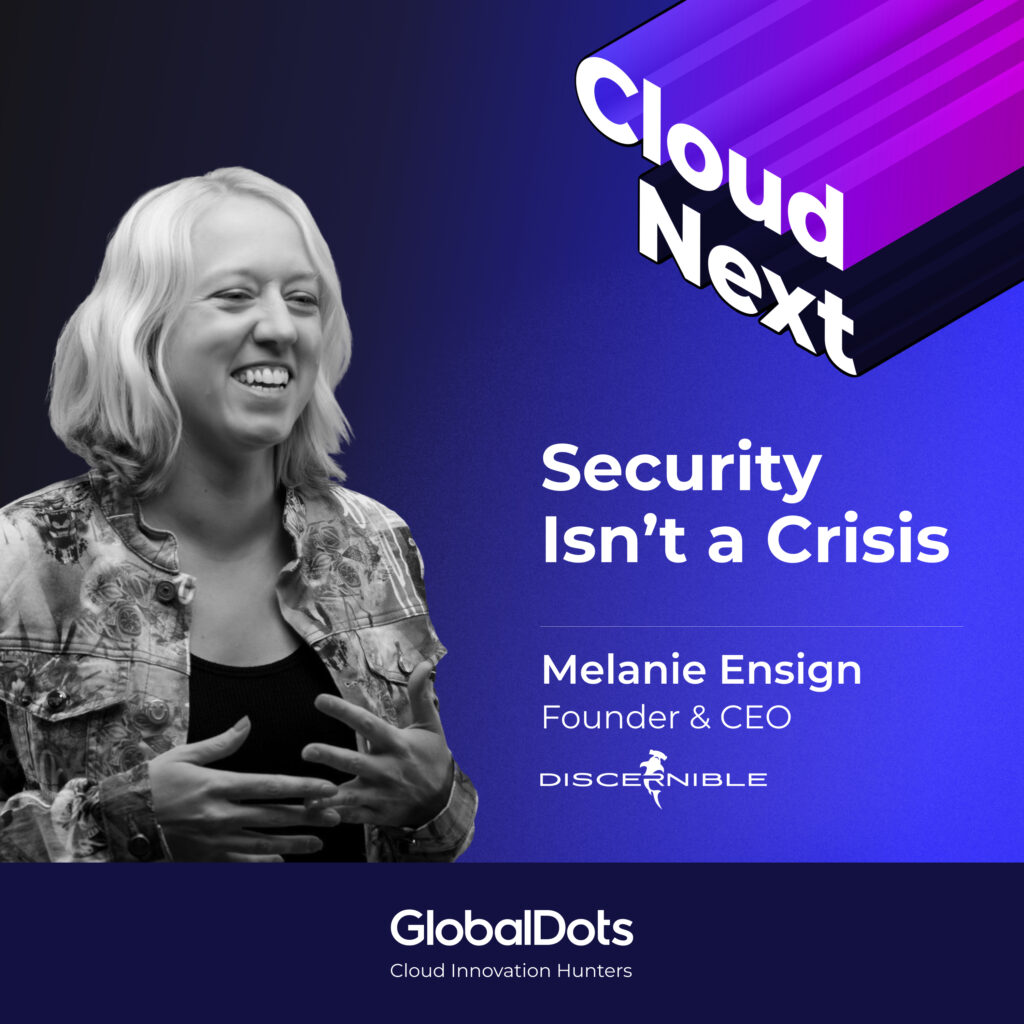
Most security teams prepare for chaos, but they should be preparing for control. Melanie Ensign, founder of Discernible, a company that helps security leaders communicate effectively during high-pressure incidents, shares how weekly drills, better communication habits, and a rescue diver’s mindset can turn high-stakes incidents into manageable events. From Web3 breaches to boardroom briefings, this episode is about strategy, not panic.
This post is based on a live panel webinar co-hosted by GlobalDots, Hydrolix, and AWS, where engineers and go-to-market leaders across CDN, edge, and agentic AI operations discussed what actually happens when delivery infrastructure breaks. Just five people on the call talking about where visibility fails today, and what changes once agents start watching the […]
Most teams still learn about a CDN problem from a customer rather than from their own monitoring stack.In this panel, GlobalDots, Hydrolix, and AWS break down why that keeps happening and what it takes to fix it: full-fidelity data instead of sampled logs, and AI agents that can actually act on it. Full Webinar: Demo […]
Most platform teams build for engineers. Pavel Brodsky's team builds with them. The difference cost Forter a full Kubernetes migration. Pavel, formerly Head of Developer Platform and now AI Adoption Lead at Forter, breaks down how treating internal engineers as customers changed everything: deploy times dropped 90%, compute costs fell 40%, and a streaming engine swap that used to take a month now takes days. Plus, what actually killed their first Kubernetes attempt, and why the answer to service mesh was no service mesh.
What if your IT survival guide read like a comedy roast? At our CloudHub Berlin event, Adam Korga joined us to decode IT Dictionary, a satirical manual for anyone who’s ever survived Agile rituals, corporate jargon, or “death by a thousand meetings.” We talk humor as therapy, the five realms of tech hell, and why laughter might just be the best debugging tool. In his book, he doesn’t pull any punches, which is exactly why he can’t even use his real name!
Technical leaders often struggle to understand how CFOs view cloud costs, ROI, and efficiency. In this episode, two CFOs share exactly what they expect from their tech counterparts and how better communication can lead to smarter spending and stronger collaboration. Featuring Yaniv Lubinski, CFO at EX.CO, and Erez Storch, CFO at PlainID.
GlobalDots' industry expertise proactively addressed structural inefficiencies that would have otherwise hindered our success. Their laser focus is why I would recommend them as a partner to other companies

CTO
 Legal Services
GlobalDots has helped us to scale up our innovative capabilities, and in significantly improving our service provided to our clients
CIO
 IT Services
It's common for 3rd parties to work with a limited number of vendors - GlobalDots and its multi-vendor approach is different. Thanks to GlobalDots vendors umbrella, the hybrid-cloud migration was exceedingly smooth

VP of Infrastructure & Technology
 Advertising Services
